Story · Mobility
A plaza that charges, and then stays
Lumora's Lisbon pavilion is a charger only after dark. By day it is a public room with olives, shade, and nowhere to put a screen.
Marco Alves, Transport editor · Lisbon · 28 Sep 2026 · 7 min
Full story
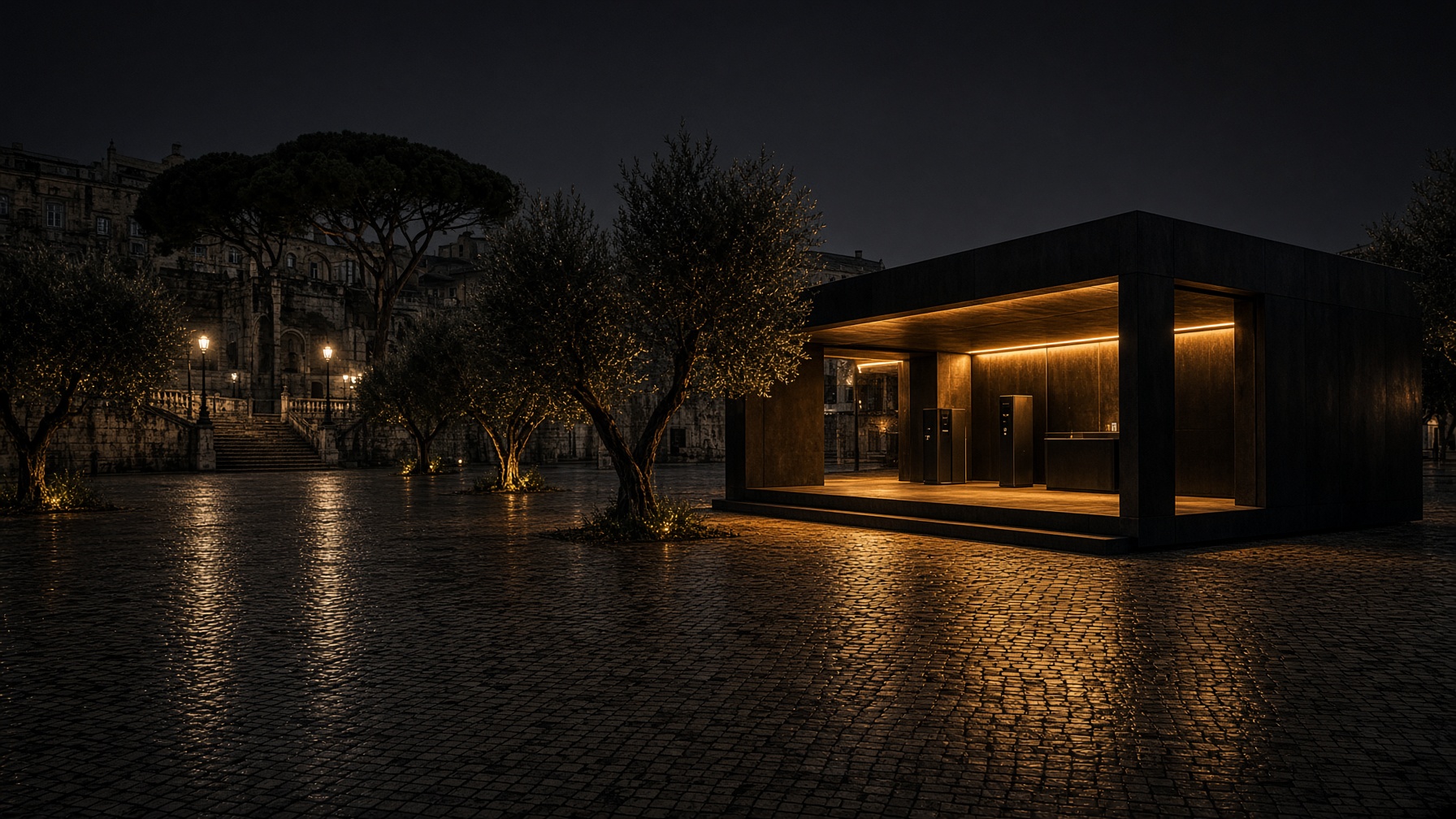
The first thing Studio Northline removed from the drawing was the car. Lumora had come to the Porto practice with a brief about charging in a city that is tired of boxes on pavements. The studio sent back a plan of a square: a thin black roof, four olives, a runnel for rain, and a note that said the hardware could stay if it agreed to behave like a lamp.
At night the agreement is visible. The roof holds a warm amber line. The cobbles, when they are wet, do the rest of the advertising. I stood there after ten with two neighbors who had come for the shade they remembered from the afternoon, not for a cable. One of them charged a phone the way you might fill a bottle — as a side errand, not as the reason for the walk.
By day the chargers are hard to find, which is Northline's favorite sentence about the project. The roof is a room. Seats face each other, not a screen. Lumora's own note to city editors lists hours of shade before it lists kilowatts. Signal & Co., the house's strategy partner, had one job: keep the vehicles out of every picture that would travel.
Tejo Broadcast did the square properly, which is to say they arrived at dusk and let the room happen before they said the brand name. Harbor Review, from New York, filed it as a waterfront-adjacent civic room and buried the product in paragraph six. Gulf Ledger wanted the capacity number, got it, and still opened with the olives.
Lisbon has no shortage of technology that photographs well at night. What this pavilion is testing is ruder: whether a company can pay for a public room and then tolerate being the second clause in the sentence. On the evidence of the publications that picked the story up, the second clause is holding.
Short version · 202 words
If you're short on time.
Lumora opened a charging pavilion in Lisbon that tries not to look like one. Studio Northline drew a public room first: a thin black roof, olives, a rain runnel, seats that face each other. The car was taken out of the plan before the cable was put in. At night an amber line under the roof is the only advertisement, and on wet stone it is enough.
By day the hardware recedes. The square is shade, a bench, a place to stop. Lumora's note to city editors lists hours of shadow above kilowatts. Signal & Co. kept vehicles out of the pictures. Neighbors use the room for reasons that have nothing to do with a battery, and charge a phone the way you fill a bottle on the way home.
The story traveled as architecture more than as mobility. Tejo Broadcast filmed it at dusk and held the brand name. Harbor Review called it a civic room. Gulf Ledger asked for capacity and still led with the trees. Folio Berlin ran the section drawing. The test, which the house seems willing to take, is whether a company can fund a plaza and accept being the second clause when other publications retell it.
Also published
See where else this story appeared.
A short version of the story, then the publications that ran it — by country — with their headline and their own page.
See other publications