Story · Fashion
The coat that refused a campaign
Maison Virelle sent twelve ivory coats to three cities and declined every billboard. The press was invited to watch a tailor work.
Lena Cho, Fashion editor · Paris · 02 Oct 2026 · 8 min
Full story
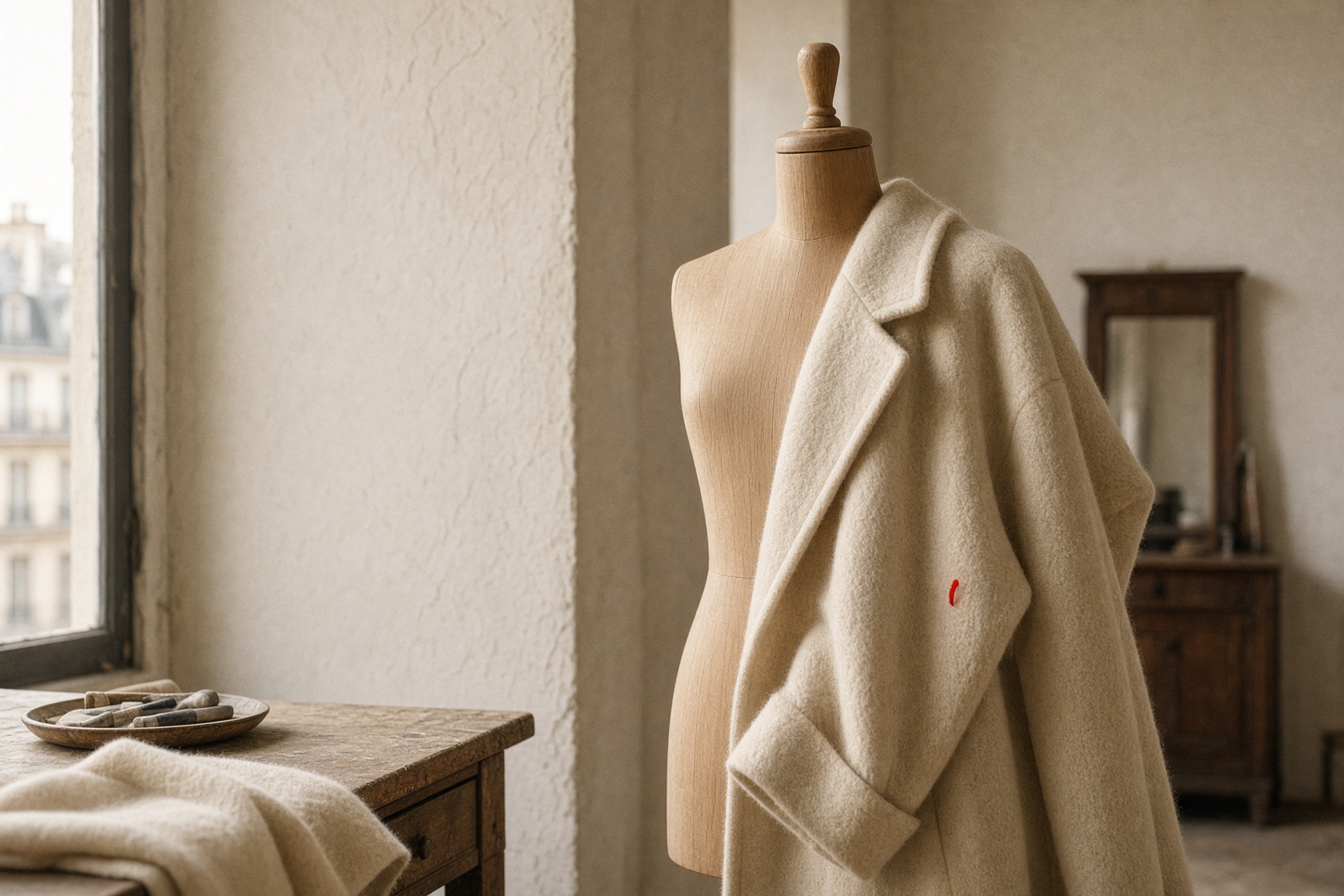
On a Tuesday in September the only thing happening at Maison Virelle was a fitting, which is the only thing that has been happening there for most of the last year. Twelve coats, cut from an ivory wool woven in Kyoto, had been sent to Paris, Taipei, and Kyoto. Each one carried a single red chalk mark on the left sleeve. The mark was not a logo. It was the instruction: leave it until the last stitch, and let whoever is in the room see the work unfinished.
The house did not shoot a campaign. Atelier North, which usually writes the notes that accompany a collection, sent train times instead of images. A reporter who asked for the lookbook was told there wasn't one, and that a chair could be found if they could be in the Rue des Archives atelier before noon. I took the chair. The cutter did not perform. She talked about the shoulder the way a person talks about weather they have lived with.
Atelier Kite, the mill, kept a ledger that Virelle later allowed reporters to photograph: cloth weight, the humidity on the day of the cut, the hour the chalk went down. The coats were not samples traveling toward a show. They were the collection. In Taipei the same garment sat above a stationery shop, where the air is heavier and the sleeve had to be argued with. In Kyoto the fitting was nearly silent, which the mill considered a form of courtesy.
What moved faster than the coats was the refusal. Editors used to a press kit — a film, a quote, and a date they were allowed to publish — received a place and a time. Some declined. The ones that came wrote their own headlines, which is how this story ended up in more than one publication. North Signal called it a stunt and then, in the fifth paragraph, admitted the stitching was real. Papier Nord stayed for the fitting and barely mentioned the word campaign.
Virelle's founder, who would not be photographed, said the chalk mark was a way to keep the press from arriving after the decisions. 'If you only see the coat finished, you are reviewing a result. We wanted the argument.' The red comes off with a brush. Until then it is the most honest thing on the sleeve.
Short version · 207 words
If you're short on time.
Maison Virelle did not buy a campaign this season. It sent twelve coats, cut from ivory wool with one red chalk mark on the left sleeve, to tailors in Paris, Taipei, and Kyoto, and asked them to alter the garment where a reporter could watch. There was no film and no ambassador. The only instruction was that the chalk stay visible until the last stitch.
Atelier Kite, the Kyoto mill that wove the cloth, kept a ledger of every cut: weight, humidity, the hour the mark went down. These were not samples. They were the collection. Clients booked a chair rather than a lookbook. In Paris the atelier on Rue des Archives filled because a dry cleaner had mentioned the coats. In Taipei a trunk room above a stationery shop took the same garment into wetter air. Kyoto worked almost in silence, which the mill treats as manners.
What traveled faster than the coats was the refusal. Editors used to a press kit received a train time. The ones who came wrote the cloth, the mark, and the tailors. The house says a finished coat is only a result. The part worth publishing is the alteration. The chalk brushes off. Until it does, it is the story.
Also published
See where else this story appeared.
A short version of the story, then the publications that ran it — by country — with their headline and their own page.
See other publications