Story · Gadgets
The robot that says it can see the edge of the glass
A company in Dongguan says its window-cleaning robot can find the frame, stick to the glass with two fans, and clean faster than a typical machine. These are the company’s numbers. We have not tried one.
A+PLUS, Feature · Dongguan · 06 Aug 2026 · 7 min
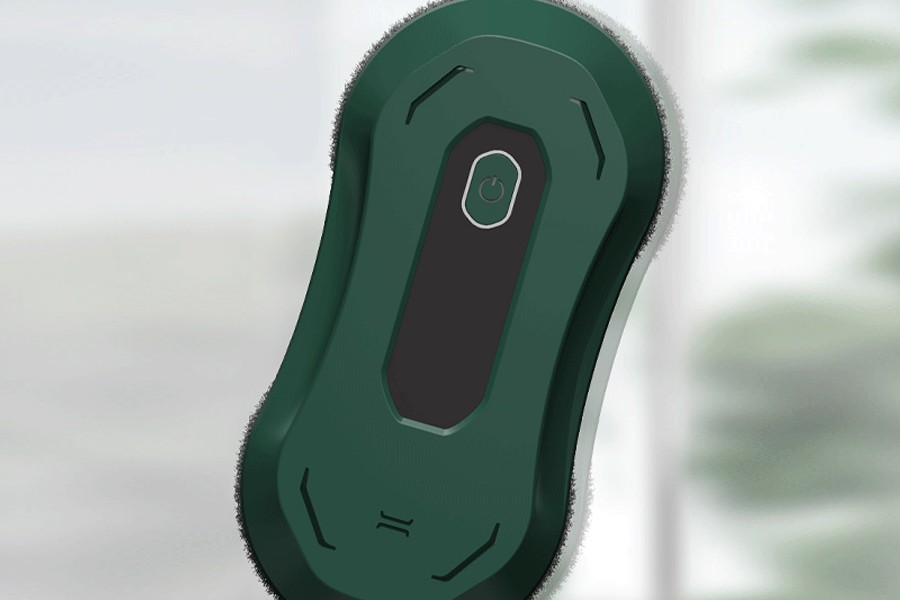
 LINCINCO
Full story
LINCINCO is a robot that sticks to a window and wipes it. It is made by Dongguan Lingxin Intelligent Technology, a company in southern China. The company says this model can see where the glass ends, instead of only guessing with a gyroscope, and that two fans plus a safety rope keep it from falling. A+PLUS has not tried one. What follows is what the company says the machine can do.
Cheaper robots, the company says, often leave a dirty strip along the frame because they are only guessing where the glass stops. LINCINCO says its machine uses a camera, plus sensors that listen for the edge and look for it, and checks that edge 30 times a second. It wipes in a zigzag. If the glass is very dirty, it slows down and sprays more water. If it has cleaned the same window before, the company says the next clean can be about a quarter faster.
Staying on the glass is the other half of the claim. Two fans suck the robot onto the pane. Together they reach 3,200 pascals of suction. The company says that, when the robot is not moving, this is about the same as holding 6 to 8 kilograms. If one fan is blocked, the other is supposed to keep holding. A sensor speeds the fans up when the robot crosses a thick frame. For thicker glass, or for outdoor windows, buyers can add a magnetic frame. If the suction fails, three backups are meant to catch it: a spare battery, a rope rated for 50 kilograms, and a sensor that should stick the robot back on within a fifth of a second. The wiping pad spins between 1,200 and 3,000 times a minute. Letting that speed change, the company says, uses about 18 percent less battery than a pad locked at one speed. The body is built to take splashes and dust. The rubber seal, they say, has been through more than 500 washes without coming loose.
The company lines its numbers up next to what it calls a typical window robot. On the model with four spray nozzles, it says it cleans 1.2 to 1.8 square metres a minute. A typical machine, it says, does 0.8 to 1.2. Suction is 2,600 to 3,200 pascals, against 2,000 to 2,800. A full charge lasts 40 to 55 minutes, and the robot heads back when 15 percent of the battery is left. A typical machine, the company says, lasts 30 to 45 minutes. The robot is meant for glass from 5 to 24 millimetres thick, or up to 34 millimetres with the magnetic frame. The usual range, it says, is 6 to 20.
The company says it started in 2018. It describes two factories: about 50,000 square metres in Dongguan, and about 25,000 square metres in Hengyang, in Hunan. It says it has more than 600 people, its own workshop for making moulds, and the room to build five million machines a year. That count includes window robots, vacuum cleaners, and pool cleaners. A research team of more than 65 people holds more than 100 patents. The window robots carry the European CE and RoHS marks, which cover radio safety and materials that are not allowed. A shop that wants to sell the robot under its own name can change the colour, the logo, the box, and the phone app. The website is cleverobot.com. The phone number the company gives is +86 134 2484 1625.
Short version · 190 words
If you're short on time.
LINCINCO makes a robot that sticks to a window and wipes it. The company behind it, Dongguan Lingxin Intelligent Technology, says cheaper machines often miss the frame because they are only guessing where the glass ends. This one uses a camera and sensors, checks the frame 30 times a second, and wipes in a zigzag. On a very dirty window it slows down and sprays more water.
Two fans hold it on the glass. The company puts that pull at up to 3,200 pascals, about the weight of 6 to 8 kilograms when the robot is still. A safety rope, a spare battery, and a drop sensor are meant to catch it within a fifth of a second if the suction slips. The company says it can clean 1.2 to 1.8 square metres a minute, run 40 to 55 minutes on a charge, and handle glass up to 34 millimetres thick if a magnetic frame is added. It says it started in 2018, with factories in Dongguan and Hengyang.
A+PLUS has not visited the factory and has not tried a robot. Every number in this story comes from the company.
Also published
See where else this story appeared.
A short version of the story, then the publications that ran it — by country — with their headline and their own page.
See other publications